



M&A Integrations: The 2.5-Year Rule
Mergers and acquisitions are among the most transformative moves a company can make to accelerate growth — but it is commonly known that 70% or more of M&A transactions fail …

In today’s highly interconnected economy, supply chain resilience is no longer just a defensive strategy; it’s essential for survival and competitiveness. With ongoing disruptions—from pandemics to geopolitical upheavals—the ability to withstand and recover from disruption to the supply chain is paramount.
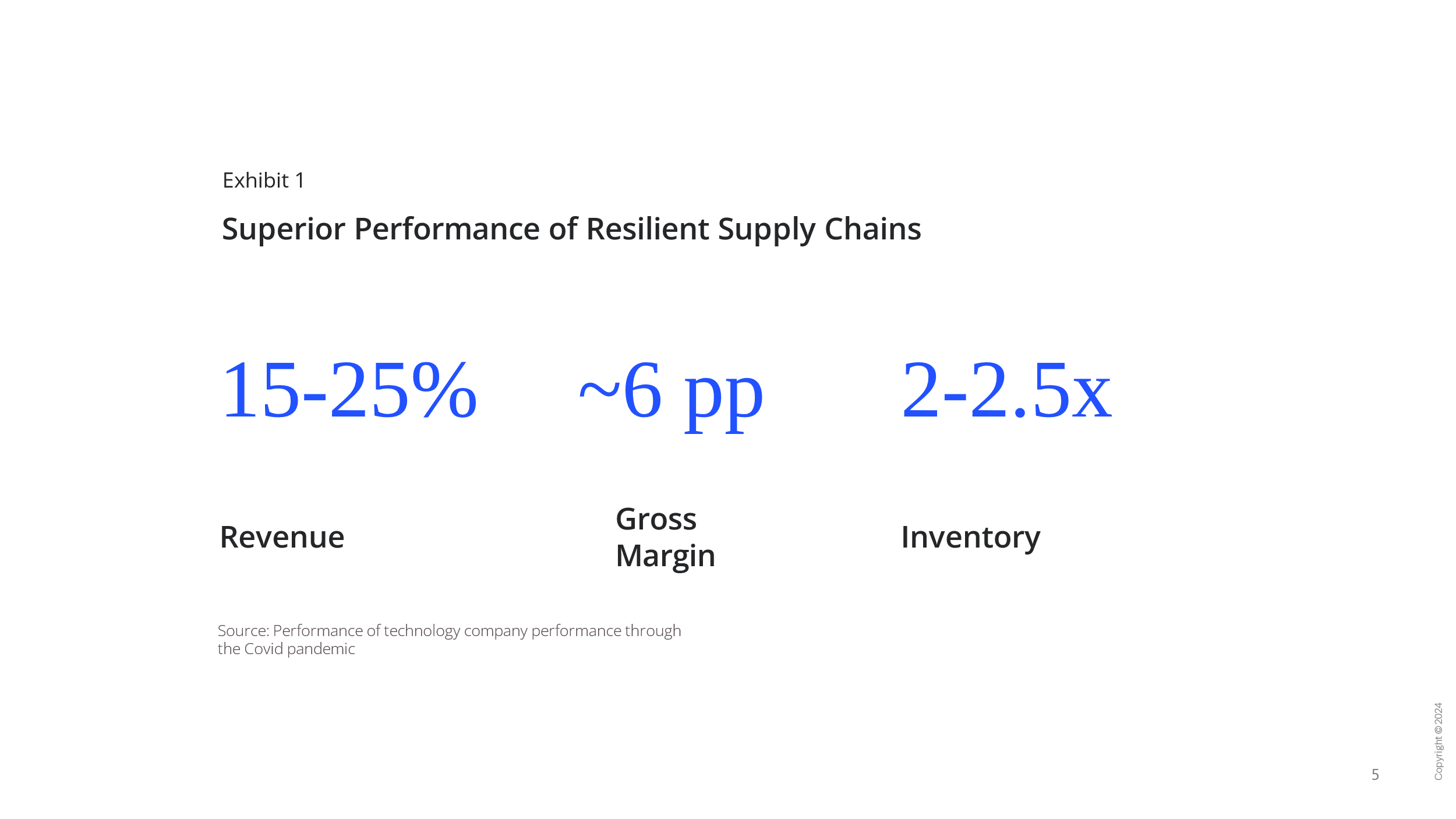
Traditional risk management focuses on identifying and mitigating known threats, but resilience is about broader preparation and adaptability. Supply chains must be equipped to respond to disruptions that cannot always be predicted. Data from recent global disruptions shows that companies with high resilience achieved 15–25% higher revenue growth and improved gross margins by ~6 percentage points, significantly outperforming less-prepared competitors. For CXOs, this means recognizing resilience as an integral component of supply chain strategy, not just a contingency.
To achieve true resilience, supply chains must incorporate two critical dimensions:
By balancing immunity and recovery, organizations can build a supply chain that is resilient – robust and adaptable.
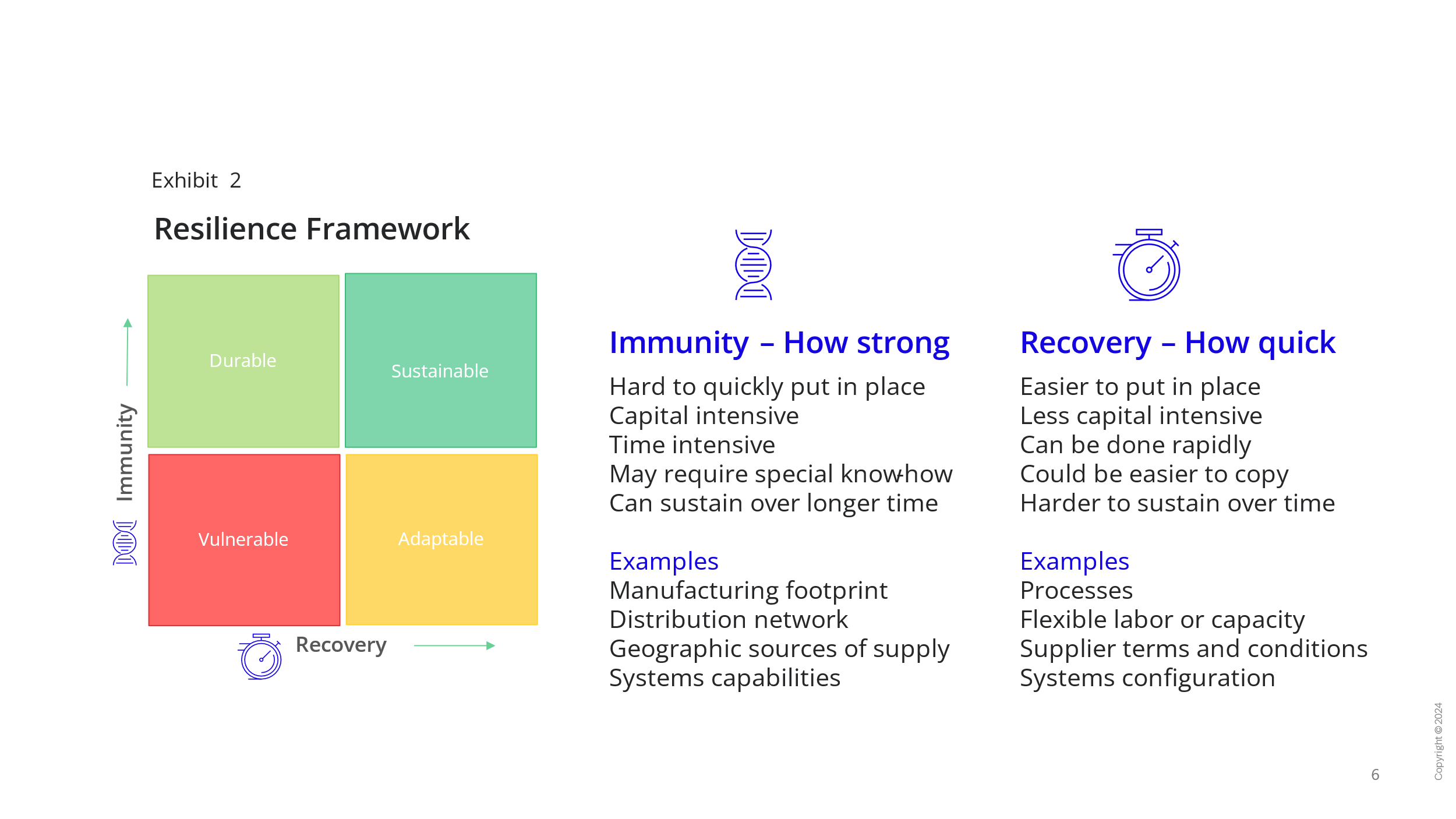
A resilient supply chain strengthens capabilities across the entire supply chain, from product development to delivery and service. Here are examples of capabilities that build varying levels of resilience across the supply chain.
To measure resilience, it’s necessary to quantify the capabilities—by scoring the maturity of the capability and weighting its contribution to resilience. This helps organizations identify gaps to targeted levels of immunity and prioritize capabilities for improvement. This structured and quantitative assessment becomes the foundation for a targeted resilience roadmap.
A Framework for Assessing and Building Resilience
To build resilience, companies need a comprehensive framework for evaluating and enhancing supply chain capabilities. Effective resilience-building strategies involve:
GenAI can play an important role in resilience, providing supply chain leaders with real-time analysis and scenario modeling capabilities. GenAI applications can help companies:
When implemented effectively into the immunity-recovery framework, GenAI models can become a powerful tool that augments human decision-making, helping companies stay agile and resilient.
In a world marked by constant disruption, supply chain resilience is no longer optional. Leaders must make resilience a strategic priority by adopting a robust quantitative framework, building end-to-end capabilities, and integrating continuous monitoring with AI-driven insights.
Begin with an end-to-end resilience assessment across your supply chain, scoring capabilities in every domain from sourcing to delivery. Define a resilience roadmap with prioritized initiatives and key performance metrics. By investing in resilience, your organization will be prepared to navigate unanticipated but guaranteed disruptions, secure a competitive edge, and achieve sustainable growth.CI






















Copyright © 2024 CASETEAM - All Rights Reserved.
CASETEAM and the CASETEAM logo are Service Marks of`
CASETEAM LLC
Share this Post